
Juju Support for Google Cloud Platform

Udi Nachmany
on 3 June 2015
 As you may have noticed in our release notes, the recent release of a stable 1.23.2 Juju core (and its 1.23.3 follow-on) is packed with goodies such as support for systemd (and Vivid), improved proxy support for restrictive networks, new charm actions, as well as a first run at Juju service leader elections – and the list goes on!
For public cloud users of Ubuntu, we are particularly excited to let you know that this version includes support for Google Compute Engine (GCE). If you’re a Google Cloud Platform user, you can now spin up, scale, and modify production workloads easily and quickly, with our market-leading, open source universal modelling tool, Juju. If you are already a Juju user and thinking about using Google Cloud Platform, you can take your magic over to them and get going in no time.
Configuring for GCE: https://jujucharms.com/docs/stable/config-gce
Juju 1.23.2 release notes: https://jujucharms.com/docs/devel/reference-release-notes
This ties in very nicely to the upstream work (here and here) we’ve been doing in the past months, to make it easy to deploy Kubernetes servers using Juju, even on cloud environments that are not yet supported by the Kubernetes project.
On a related note, if you’re using Google Cloud Platform you’ve probably taken a look at the sleek Cloud Launcher Google have released recently. And if you looked closely, you also noticed that you can now spin up your Ubuntu VMs using this very friendly UI.
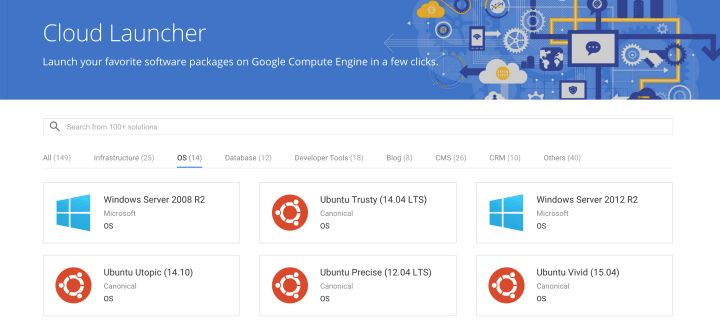 And at the time of writing, since the list is sorted by popularity, Ubuntu (unsurprisingly) has four of the top six spots.
Talk to us today
Interested in running Ubuntu in your organisation?
Newsletter signup
Related posts
Developing web apps with local LLM inference
I’ve yet to meet a developer that enjoys working with metered AI APIs. The need to pay for every API call in development works in direct opposition to the...
PinTheft Linux kernel vulnerability mitigation
A local privilege escalation (LPE) security vulnerability in the Linux kernel, codename “PinTheft,” was publicly disclosed on May 19, 2026. The vulnerability...
Canonical announces fully Managed Kubeflow AI operations platform on the Microsoft Azure Marketplace
Canonical has announced the general availability of Managed Kubeflow on the Microsoft Azure Marketplace. This fully managed MLOps platform allows enterprise...